
7 Mistakes Buyers Make When Sourcing Outdoor Fire Pit Bowls
Avoid seven common sourcing mistakes involving materials, stability, drainage, coatings, packaging and OEM requirements when purchasing outdoor fire pit bowls.

7 Mistakes Buyers Make When Sourcing Outdoor Fire Pit Bowls
A round outdoor fire pit bowl may appear to be a simple metal product. However, small differences in material thickness, leg construction, drainage, surface treatment and packaging can significantly affect its safety, durability and commercial value.
For importers, distributors, garden retailers and outdoor-living brands, choosing a fire pit based only on appearance or unit price can lead to quality complaints, unstable products and unexpected replacement costs.
Here are seven common mistakes buyers should avoid when sourcing outdoor fire pit bowls.
1. Choosing the Lowest Price Only
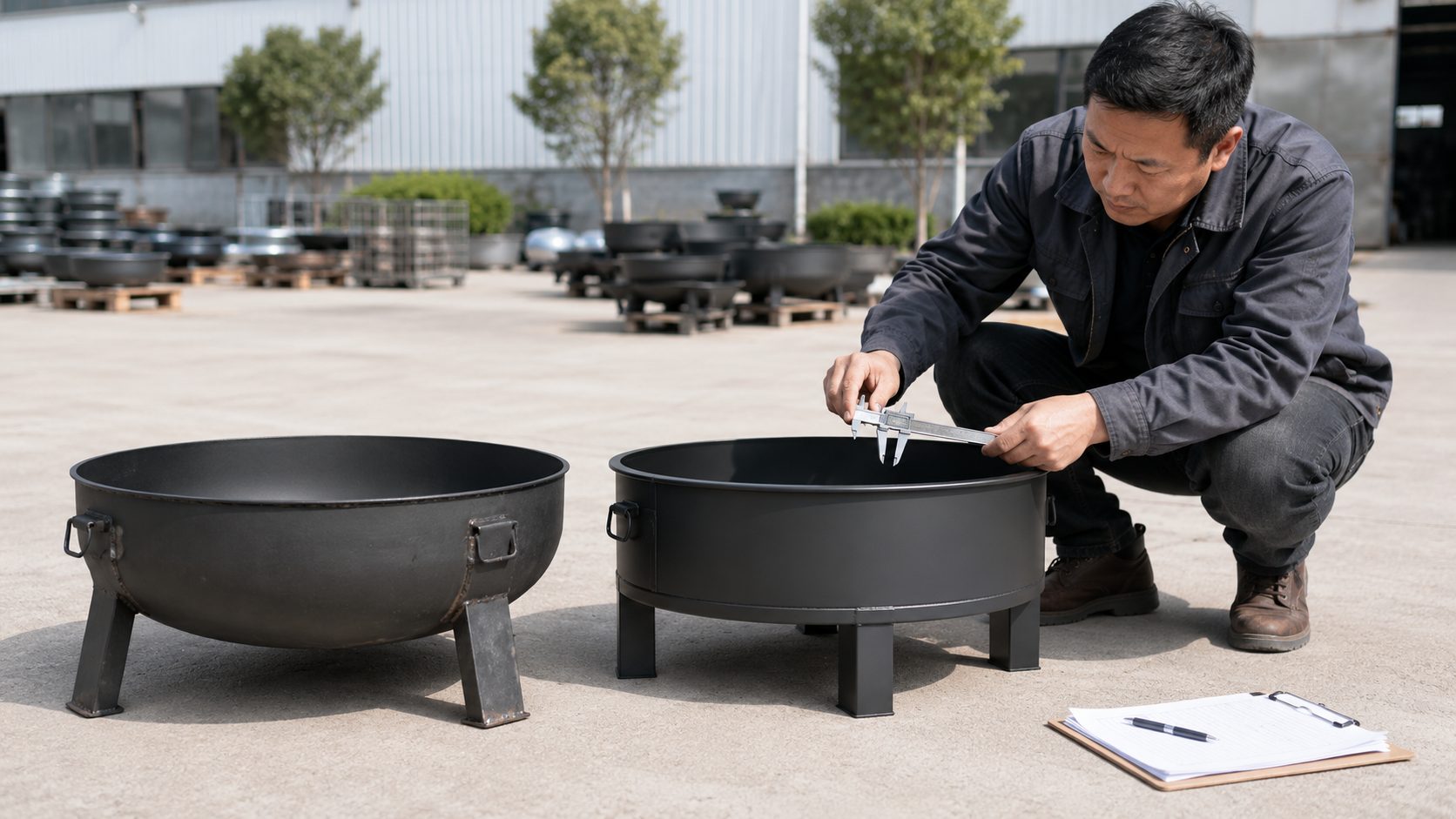
A lower quotation does not always represent a lower total purchasing cost.
The price of a fire pit can be affected by its steel grade, material thickness, bowl depth, leg construction, welding method, coating system and packaging. Two products with a similar appearance may perform very differently during transportation and repeated outdoor use.
Before comparing prices, buyers should request the same specifications from every supplier. This makes the quotation comparison more accurate and reduces the risk of receiving a product that is lighter or weaker than expected.
2. Ignoring Material Thickness
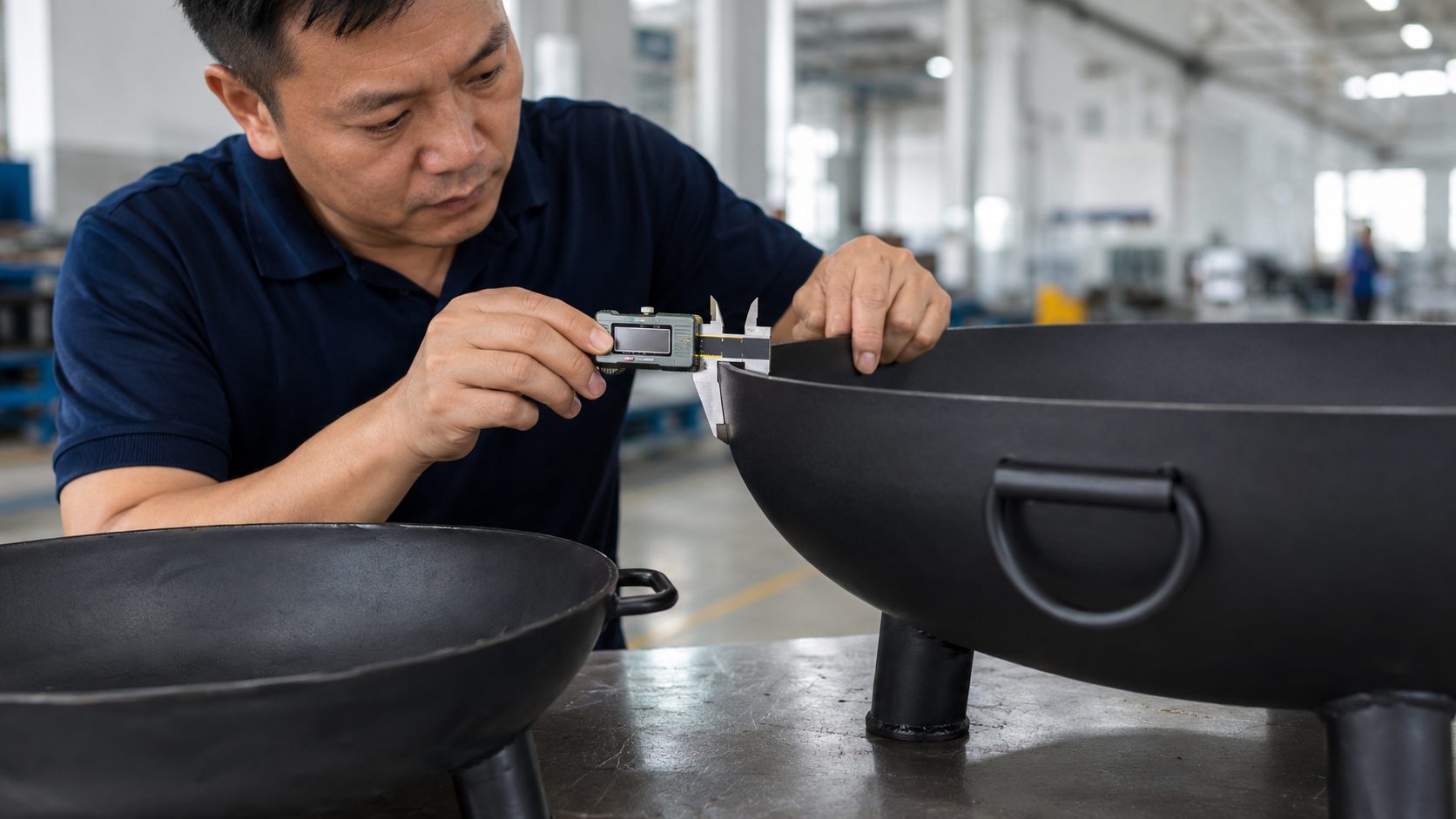
The fire bowl is continuously exposed to heat from burning charcoal or firewood. If the metal is too thin for the intended application, the bowl may deform more easily after repeated heating and cooling cycles.
Buyers should confirm:
Material type
Bowl thickness
Leg thickness
Product weight
Recommended fuel
Intended frequency of use
A supplier should be able to manufacture according to an agreed technical specification instead of relying only on reference photographs.
3. Overlooking Stability and Leg Construction
A fire pit must remain stable when loaded with firewood. Buyers sometimes focus on the bowl design but fail to examine the legs, welding points and contact area with the ground.
The pictured model uses a round bowl supported by four outward-positioned metal legs. This type of structure can provide a broad supporting footprint, but the final stability still depends on accurate assembly, consistent leg angles and secure connections.
Sample inspection should include a stability check on a flat, non-combustible surface before mass production is approved.
4. Forgetting Drainage and Outdoor Storage
Fire pits are frequently displayed or stored outdoors. Rainwater left inside the bowl can accelerate corrosion and create maintenance problems.
Buyers should confirm whether the design requires drainage holes, a weather cover or storage instructions. Drainage must be positioned carefully so that it does not weaken important areas or allow hot ash to fall onto an unsafe surface.
The appropriate solution depends on the product design and the way customers are expected to use and store it.
5. Assuming Every Coating Is Heat-Resistant
Standard decorative paint and heat-resistant coating are not interchangeable.
The bowl, legs and handles may be exposed to different temperatures. Buyers should identify which components are located near the heat source and request a suitable surface-treatment specification for each area.
Important points include:
Coating type
Recommended temperature range
Surface preparation
Coating thickness
Color requirements
Corrosion-resistance expectations
Do not accept a general statement such as “black painted finish” without confirming the actual coating system.
6. Approving Packaging Too Late
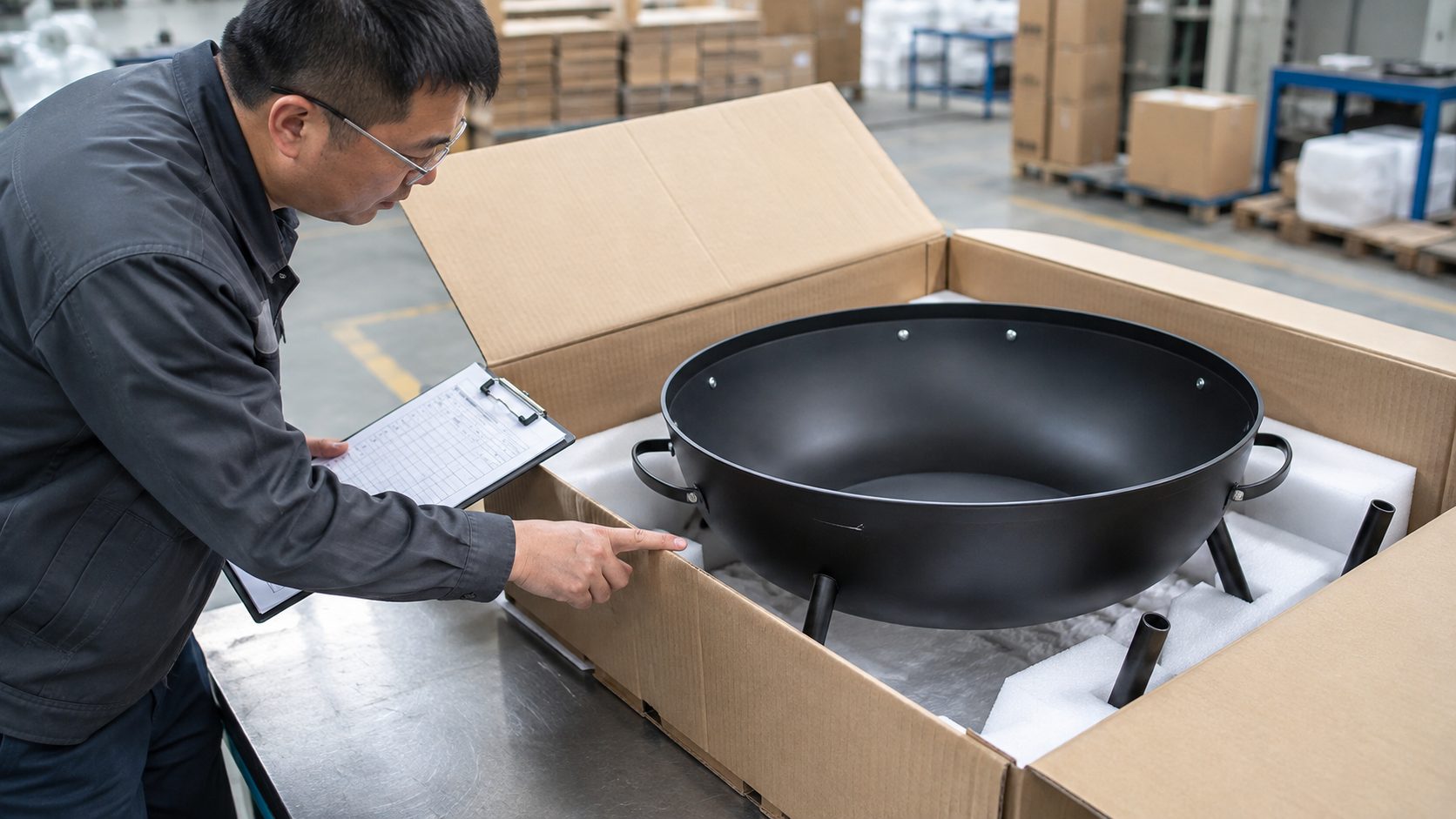
Fire pit bowls have curved surfaces, projecting handles and separate or attached legs. These areas can be scratched, bent or damaged if the packaging is developed only after production has started.
Packaging should be reviewed during the sample stage. Buyers should confirm carton dimensions, protective materials, component positioning, assembly instructions, warning labels and barcode requirements.
For retail or e-commerce distribution, drop-test expectations and individual parcel handling should also be discussed before an order is finalized.
7. Sending an Incomplete OEM Brief
A reference image alone is not enough for reliable OEM or ODM production.
A useful sourcing brief should include:
Required diameter and bowl depth
Material and thickness
Overall product height
Leg and handle construction
Surface finish and color
Fuel type
Target market
Packaging requirements
Expected order quantity
Required testing or compliance documents
Providing this information early helps the factory evaluate manufacturability, calculate costs and prepare a more accurate sample.
What Buyers Should Check Before Ordering
Before confirming mass production, request a complete specification sheet and approve a physical sample. Check the dimensions, stability, weld appearance, surface finish, assembly, packaging and required warning information.
The fire pit should also be assessed according to the regulations and safety requirements of its destination market. It must be used outdoors on a stable, non-combustible surface and kept away from combustible materials.
Source Outdoor Fire Pits From Vietnam
TWS Industries supports B2B buyers with OEM and ODM metal manufacturing in Vietnam. Outdoor fire pit bowls can be developed according to the buyer’s required dimensions, construction, surface finish, packaging and branding.
Send us your drawing, reference image, target quantity and destination market. Our team can review the requirements and prepare a product-specific quotation.
Contact TWS Industries to discuss your outdoor fire pit sourcing project.