
Best Soil Mix for Vegetable Garden: Easy DIY Recipe
Discover the best soil mix for a vegetable garden, including simple ratios for raised beds, containers, and in-ground gardens. Learn how to improve drainage, moisture retention, nutrients, and root growth with Pet and Garden.

Best Soil Mix for Vegetable Garden: Easy DIY Recipe
The best soil mix for a vegetable garden should retain moisture, drain excess water, provide nutrients, and allow air to reach plant roots. A balanced soil structure helps vegetables grow stronger, resist stress, and produce better harvests.
For most raised vegetable gardens, a reliable starting recipe is:
40% quality topsoil + 40% finished compost + 20% aeration material
The aeration portion may include coconut coir, aged pine bark, perlite, leaf mold, or a suitable combination.
This Pet and Garden guide explains how to choose, mix, and maintain healthy soil for raised beds, containers, and in-ground vegetable gardens.
What Is the Best Soil Mix for Vegetable Garden Success?
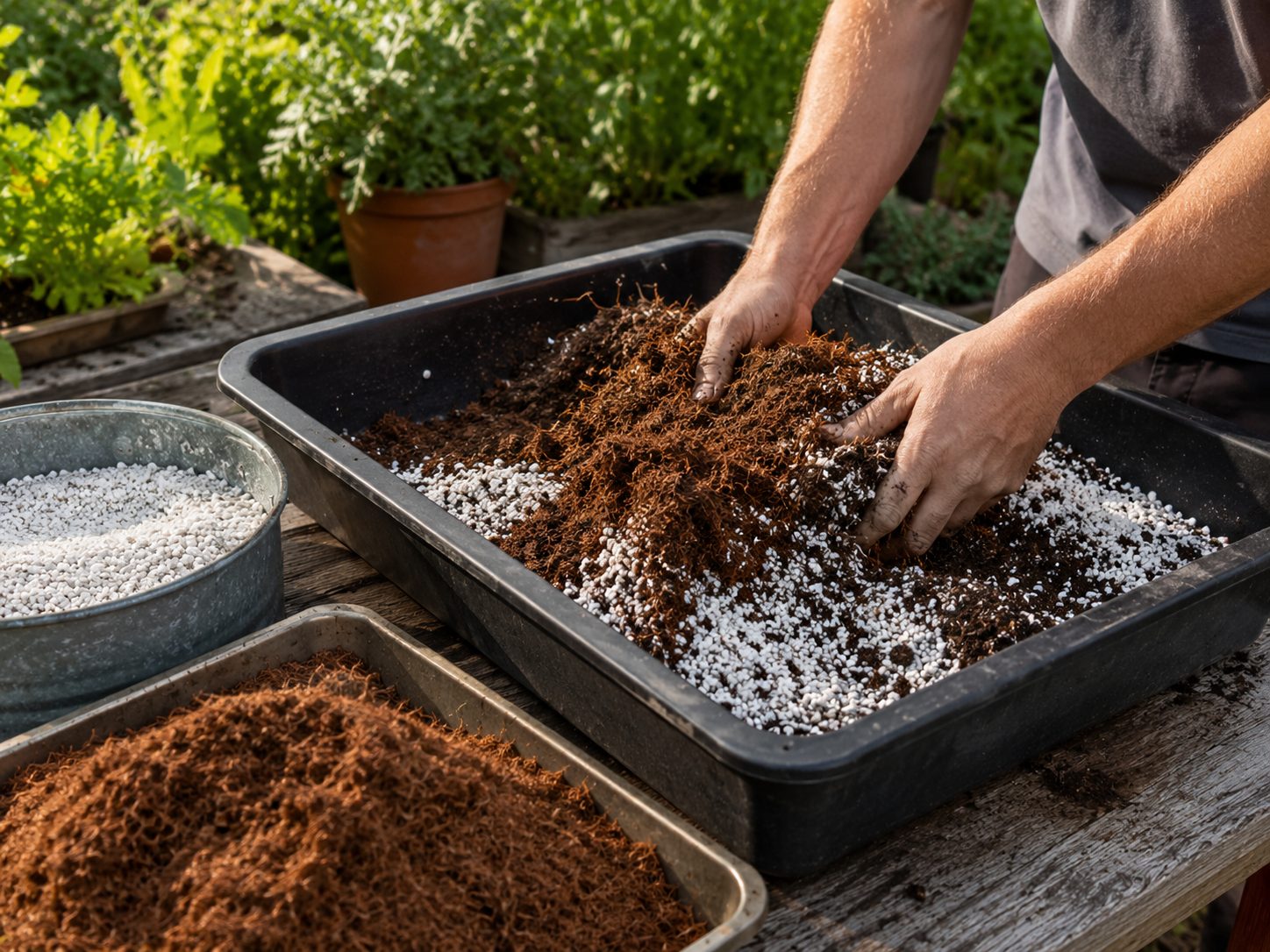
A good vegetable garden soil mix should have five essential qualities:
Good drainage
Adequate moisture retention
Enough air space for roots
Balanced nutrients
Suitable soil pH
Most vegetables grow well in slightly acidic to neutral soil, generally around pH 6.0 to 7.0.
The ideal mix should feel loose and crumbly. It should hold together lightly when squeezed but break apart easily when touched.
Avoid soil that becomes hard, sticky, muddy, or waterlogged.
Best Soil Mix for Vegetable Garden: Recommended Ratio
Ingredient | Ratio | Main purpose |
|---|---|---|
Screened topsoil | 40% | Adds minerals, weight, and structure |
Finished compost | 40% | Adds organic matter and nutrients |
Aeration material | 20% | Improves drainage and root oxygen |
To make 10 cubic feet of soil, combine:
4 cubic feet of topsoil
4 cubic feet of finished compost
2 cubic feet of aeration material
Mix ingredients by volume rather than weight because each material has a different density.
Main Ingredients
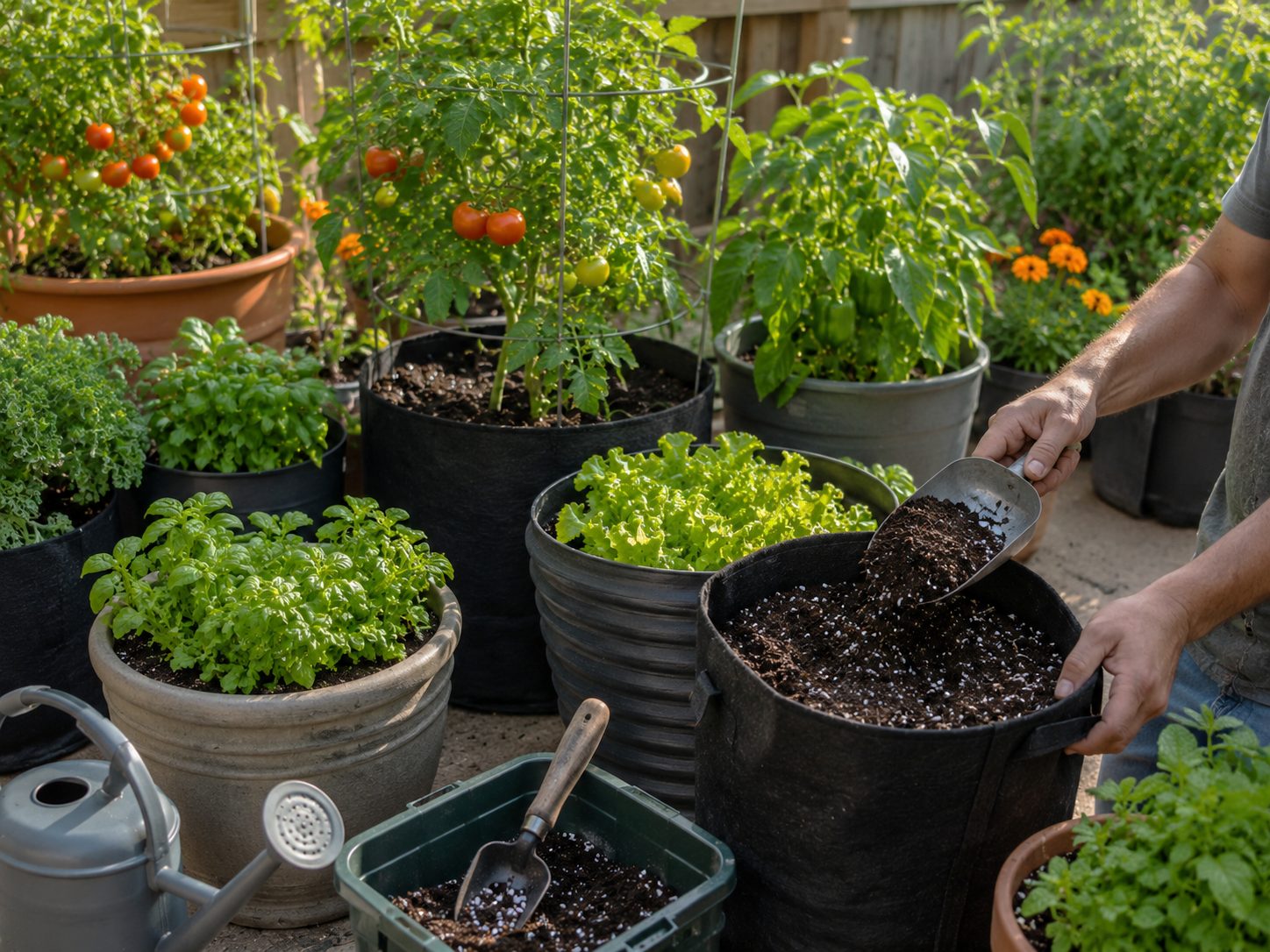
Quality Topsoil
Topsoil provides the mineral base of the mixture. Choose screened soil without construction waste, large stones, weeds, or chemical contamination.
Do not fill raised beds with dense clay or unknown fill dirt.
Finished Compost
Compost improves soil fertility, water retention, structure, and biological activity.
Good compost should be dark, crumbly, cool, and earthy-smelling. Avoid compost that smells sour, feels hot, or still contains large amounts of undecomposed material.
Pure compost is not recommended as the only growing medium because it may shrink, hold excessive nutrients, or contain high salt levels.
Coconut Coir
Coconut coir improves moisture retention while keeping the soil relatively loose. It is useful in raised beds, containers, and hot climates.
Use washed and buffered horticultural coir because poorly processed coir may contain excess salts.
Perlite
Perlite creates air spaces and improves drainage. It is especially useful for container vegetables and dense soil blends.
Perlite does not provide significant nutrients, so it should be combined with compost and fertilizer when needed.
Aged Pine Bark
Fine, aged pine bark improves drainage and helps prevent compaction. Avoid using large quantities of fresh wood because decomposition may temporarily reduce available nitrogen.
Best Soil Mix for Vegetable Garden Raised Beds
A practical raised-bed recipe is:
40% screened topsoil
30% finished compost
20% coconut coir or leaf mold
10% aged pine bark or aeration material
In dry climates, slightly increase coir or leaf mold.
In wet climates, reduce moisture-retaining materials and increase drainage ingredients.
Apply organic mulch after planting to reduce evaporation, control weeds, and protect the soil surface.
Best Soil Mix for Container Vegetables
Garden soil alone is usually too dense for pots.
Use this lighter container mix:
40% coconut coir or peat-based growing medium
30% finished compost
20% perlite
10% aged pine bark or vermiculite
Make sure every container has open drainage holes.
Container vegetables may also require regular feeding because nutrients are used by plants or washed out during watering.
How to Improve In-Ground Garden Soil
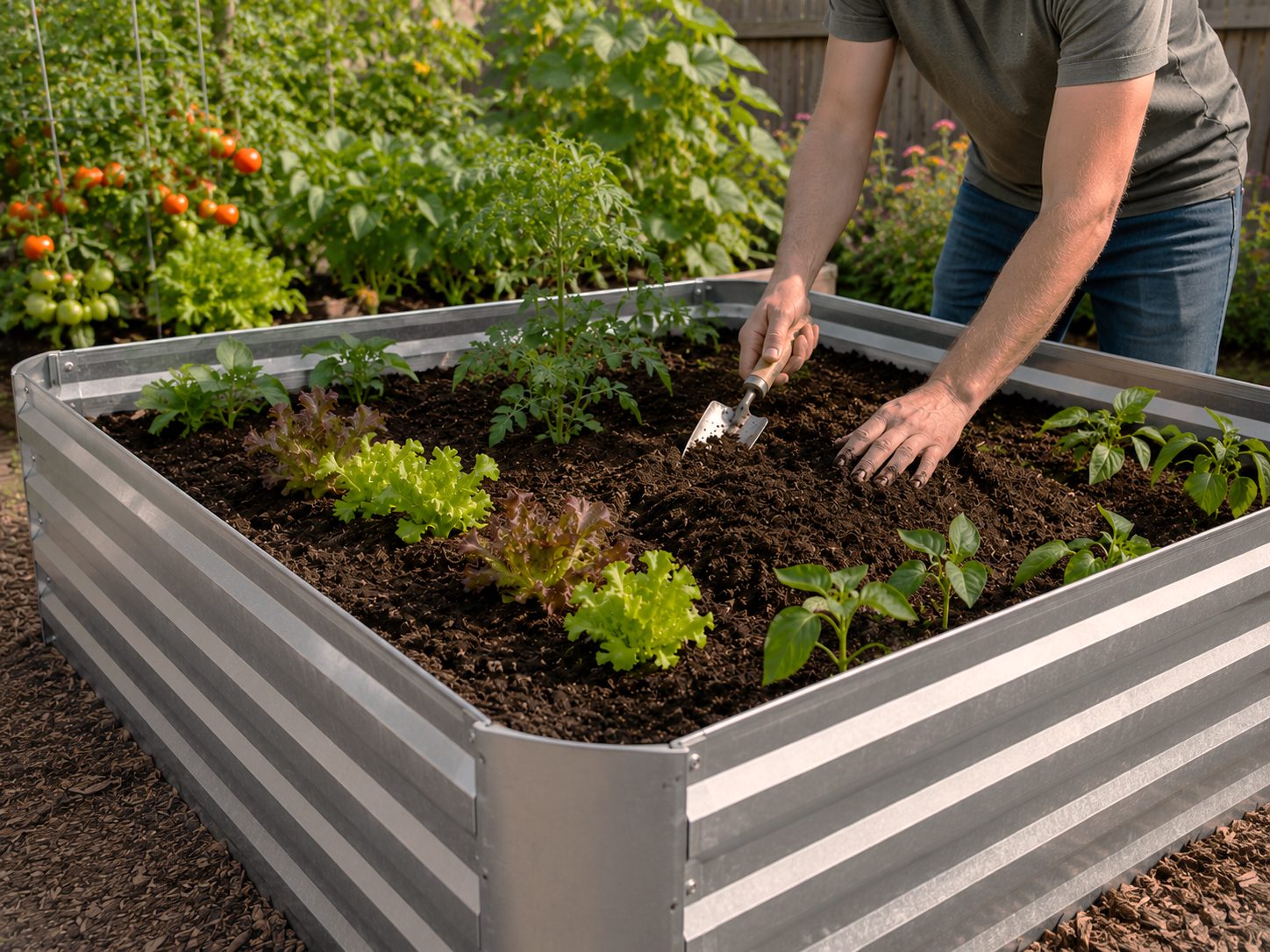
For an existing vegetable garden, you usually do not need to replace all the soil.
Instead:
Test the soil pH and nutrient levels.
Add approximately 1 to 2 inches of finished compost when needed.
Mix compost into the upper soil layer.
Use mulch to protect moisture and soil structure.
Avoid walking directly on planting beds.
For heavy clay soil, improve a wider area instead of filling individual planting holes with loose material. Raised beds may be a better solution where drainage remains poor.
For sandy soil, add compost, leaf mold, or coir to improve water and nutrient retention.
Common Soil Mixing Mistakes
Avoid these common problems:
Using heavy garden soil in containers
Filling beds with 100% compost
Using fresh manure around vegetables
Adding fertilizer without testing the soil
Using too much fine sand in heavy clay
Compacting soil by walking on garden beds
Ignoring drainage problems
More fertilizer does not always mean better growth. Excess nutrients can damage roots, reduce fruit production, and create environmental problems.
Soil Needs for Popular Vegetables
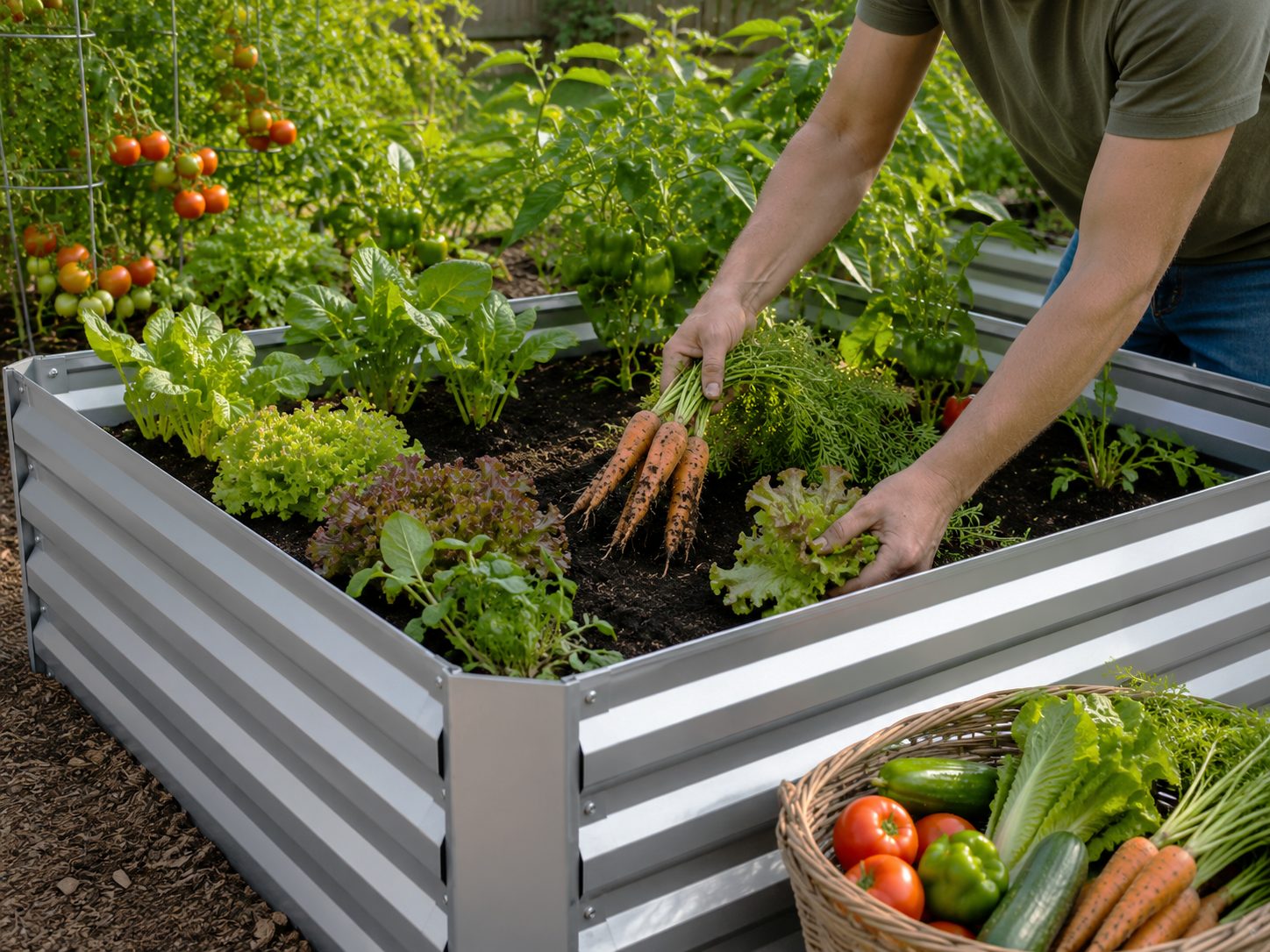
Tomatoes and peppers: Need fertile, well-drained soil with consistent moisture.
Lettuce and leafy greens: Prefer moisture-retentive soil with steady fertility.
Carrots and radishes: Need loose, stone-free soil for straight root development.
Cucumbers and squash: Grow best in rich soil that stays moist but not waterlogged.
Beans and peas: Usually need less nitrogen than leafy vegetables.
Frequently Asked Questions
What is the best soil mix for a vegetable garden?
A balanced starting mix is 40% topsoil, 40% finished compost, and 20% aeration material.
Can vegetables grow in pure compost?
Vegetables may grow temporarily in pure compost, but it is not ideal for long-term use because of possible nutrient imbalance, shrinkage, or high salt levels.
What pH is best for vegetable garden soil?
Most vegetables prefer soil with a pH between approximately 6.0 and 7.0.
Should I use potting mix in raised beds?
Potting mix can be used, but filling large raised beds entirely with it may be expensive. A blend of topsoil, compost, and aeration material is usually more practical.
How often should garden soil be replaced?
Healthy garden soil normally does not need complete replacement. Improve it with compost, mulch, crop rotation, and soil-test-based fertilization.
Final Recommendation from Pet and Garden
For most vegetable gardens, start with:
40% screened topsoil + 40% finished compost + 20% aeration material
Adjust the recipe according to your climate, drainage, crop type, and watering habits.
Healthy soil is not simply rich in nutrients. It must also support water movement, oxygen, root growth, and beneficial soil life. Build the soil first, and your vegetable garden will produce healthier plants and more reliable harvests.
Related / Bài viết & sản phẩm liên quan
Explore more content and products hand-picked for this article.
 Blog
BlogRaised Garden Beds vs. In-Ground Gardening: Which One Is Better for Your Garden?
Read more → Blog
BlogBlack Metal Indoor Plant Stand for Modern Minimalist Home Styling
Read more → Product
Galvanized Steel Raised Garden Bed 4 x 2 x 1 ft
View product → Product
Galvanized Steel Raised Garden Bed 4 x 4 x 1 ft
View product →