Hose Reel Cart 200ft: A Buyer's Guide to Specs and Sizing
Discover how to choose the right 200ft hose reel cart for your garden. Explore hose capacity, steel frame construction, wheel design, and essential features for efficient watering and easy hose storage.

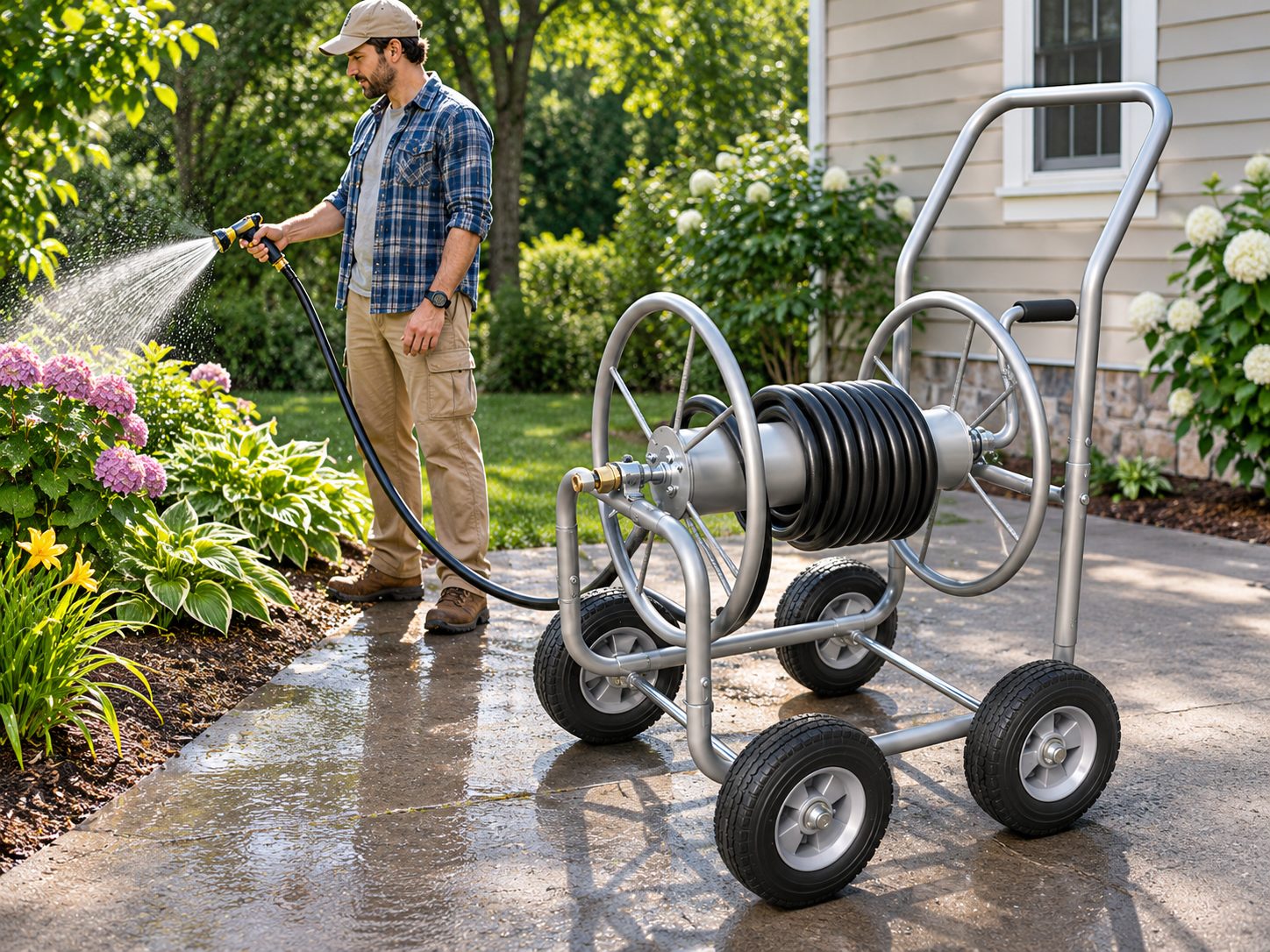
The hose reel cart 200ft is a wheeled hose storage unit built to hold up to 200 feet of hose while keeping it tangle-free and ready for use. For buyers and importers, the product is best understood through its construction and its measurements: a powder-coated steel frame, a smooth-rolling reel, four 10 inch pneumatic wheels, a foam-padded handle and an integrated storage basket. Its overall assembled size is 990 × 635 × 1100 mm, net weight is 18 kg, and each unit ships one piece per carton measuring 510 × 460 × 530 mm. These figures matter because they determine how the cart performs in the field and how efficiently it moves through your supply chain.
What the hose reel cart 200ft offers in daily use
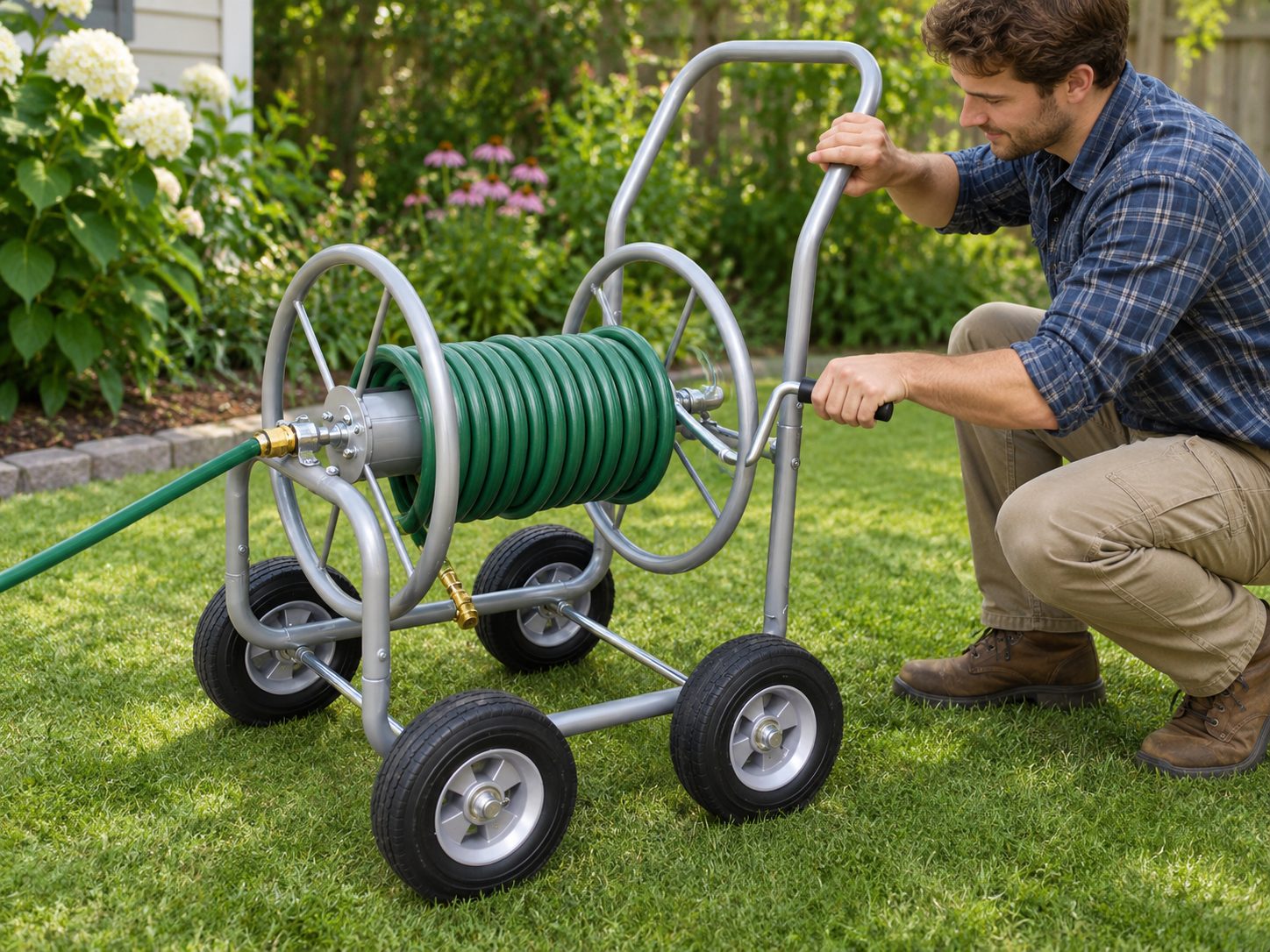
The core value of this cart is capacity combined with mobility. A 200 ft hose is long enough for large gardens, commercial grounds and landscaping jobs, but a hose that length becomes difficult to drag by hand. Mounting it on a reel with large air-filled wheels solves that problem: the reel keeps the hose coiled and untangled, and the wheels carry the weight across grass, gravel and uneven ground.
Supporting features reinforce the same idea. The padded handle reduces fatigue during maneuvering, and the storage basket keeps nozzles, gloves and small tools within reach so users are not walking back to a shed mid-task. The powder-coated steel frame resists rust, which matters for a product stored outdoors or used in damp conditions.
Hose reel assembled size and footprint planning
The assembled size of 990 × 635 × 1100 mm (length × width × height) is the first number to check against your market. At roughly one meter long and just over one meter tall, the cart occupies meaningful space in a garden shed, garage or retail display area, so buyers should confirm it suits the storage habits of the end user.
Width is the figure that most affects handling. At 635 mm across, the cart passes through standard garden gates and shed doors while remaining stable when a full hose is wound on the reel. Height of 1100 mm places the handle at a comfortable pushing position for most adults. For retail buyers, the assembled footprint also guides floor-space planning and the size of any display or demonstration area.
Hose reel CBM and carton data for freight planning
Freight economics depend on packed volume rather than product weight. Each carton measures 510 × 460 × 530 mm and holds one unit, giving a carton volume of 0.69 CBM. Net product weight is 18 kg, so the shipping weight per carton will be somewhat higher once packaging and accessories are included.
That 0.69 CBM per unit is the key input for container planning. Buyers should calculate how many cartons fit a 20 ft or 40 ft container with their forwarder, because the tall carton shape leaves some unused space depending on stacking. Requesting the carton dimensions and CBM early avoids surprises when booking space and helps compare freight quotes on a like-for-like basis.
Hose reel specifications at a glance
The main specifications are straightforward, which makes the product easy to list and describe in catalogs and marketplaces:
Capacity: up to 200 ft of hose
Frame: powder-coated steel for rust resistance
Wheels: four 10 inch (25 cm) pneumatic tires
Handle: foam-padded grip
Extras: integrated storage basket for nozzles and tools
Assembled size: 990 × 635 × 1100 mm
Net weight: 18 kg (approximately 39.7 lbs)
Packing: one piece per carton, 510 × 460 × 530 mm, 0.69 CBM
These details cover the practical questions most end users ask: how much hose it holds, how it rolls, how it is carried and how much space it needs.
Hose reel technical parameters that affect performance
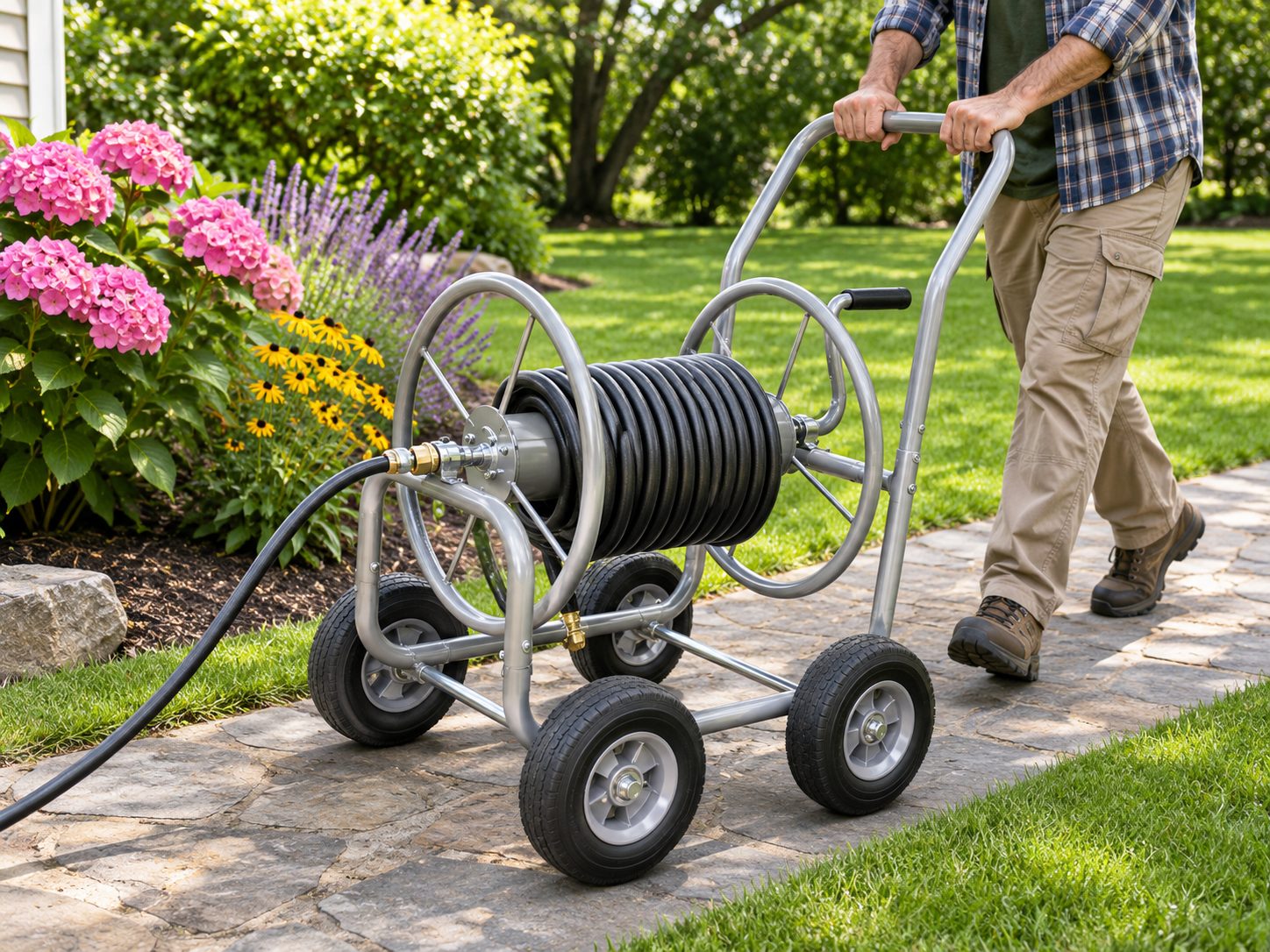
Beyond the headline figures, a few technical parameters drive real-world performance. Pneumatic wheels are the most important: air-filled tires absorb vibration and roll more easily over rough ground than solid wheels, which is why the cart handles gravel and lawn edges well. The trade-off is that pneumatic tires can lose pressure over time, so buyers should note inflation and maintenance in their product documentation.
Frame construction is the second factor. Powder coating protects the steel from moisture and general wear, extending service life in outdoor storage. Reel smoothness is the third: a freely rotating reel keeps the hose from kinking and makes retraction easier, which is the difference between a cart that gets used and one that gets abandoned. Finally, the load path matters — the frame must stay upright with a full 200 ft hose wound on, which is why the wide wheelbase and low center of gravity are worth highlighting in marketing copy.
Comparing options before you commit
Buyers sourcing this category usually weigh a few alternatives. Smaller two-wheel carts are lighter and cheaper to ship but less stable on rough ground and hold less hose. Wall-mounted reels save floor space but cannot follow the user around a large property. Four-wheel carts like this one trade a larger footprint for stability, capacity and easy movement, which suits large gardens, commercial grounds and rental fleets.
Within four-wheel carts, the main variables are wheel type, frame material and capacity. Air-filled wheels and a steel frame sit at the durable end of the range, while the 200 ft capacity positions the product for demanding users rather than casual gardeners.
Customization and OEM/ODM options
For importers building a private-label line, this cart is a practical base for customization discussions. Typical areas to raise with the supplier include frame color and finish, handle and wheel specifications, basket configuration, carton printing and labeling, and instruction manuals in the target language. Because the product is a straightforward assembly of steel, wheels and a reel, changes tend to focus on finish and packaging rather than core structure. Confirm with the supplier which options are available and how any change affects carton size, CBM and weight before finalizing your order.
What to include in a quotation request
A clear inquiry gets a faster, more accurate response. Include the following when you contact a supplier:
Target quantity and expected order frequency
Destination port and preferred shipping terms
Whether you need standard or customized color, branding and packaging
Required carton marking and language for manuals and labels
Any specific wheel, handle or basket preferences
Requested sample timeline and documentation needs
Asking for the carton dimensions, CBM and net weight per unit alongside pricing lets you compare landed cost properly rather than on unit price alone.
Next step
If this hose reel cart 200ft fits your range, send your quantity, destination and customization requirements to the supplier and request a formal quotation with packing data. Clear specifications up front keep sourcing simple and predictable.
#HoseReelCart #GardenEquipment #HoseReelSpecs #OutdoorWatering #LandscapingTools