
How to Use a Compost and Peat Moss Spreader for Lawn Care
Learn how to spread compost and peat moss evenly with a rolling lawn spreader. Discover preparation tips, application steps, common mistakes and practical lawn care solutions.

How to Use a Compost and Peat Moss Spreader for Better Lawn Care
A healthier lawn begins beneath the grass. And better soil care begins with the right tools.
Maintaining a beautiful lawn takes more than regular watering and mowing. Soil quality, organic matter, and proper lawn top dressing all contribute to a well-managed growing environment.
Yet spreading compost or peat moss by hand can be time-consuming, messy, and difficult to control.
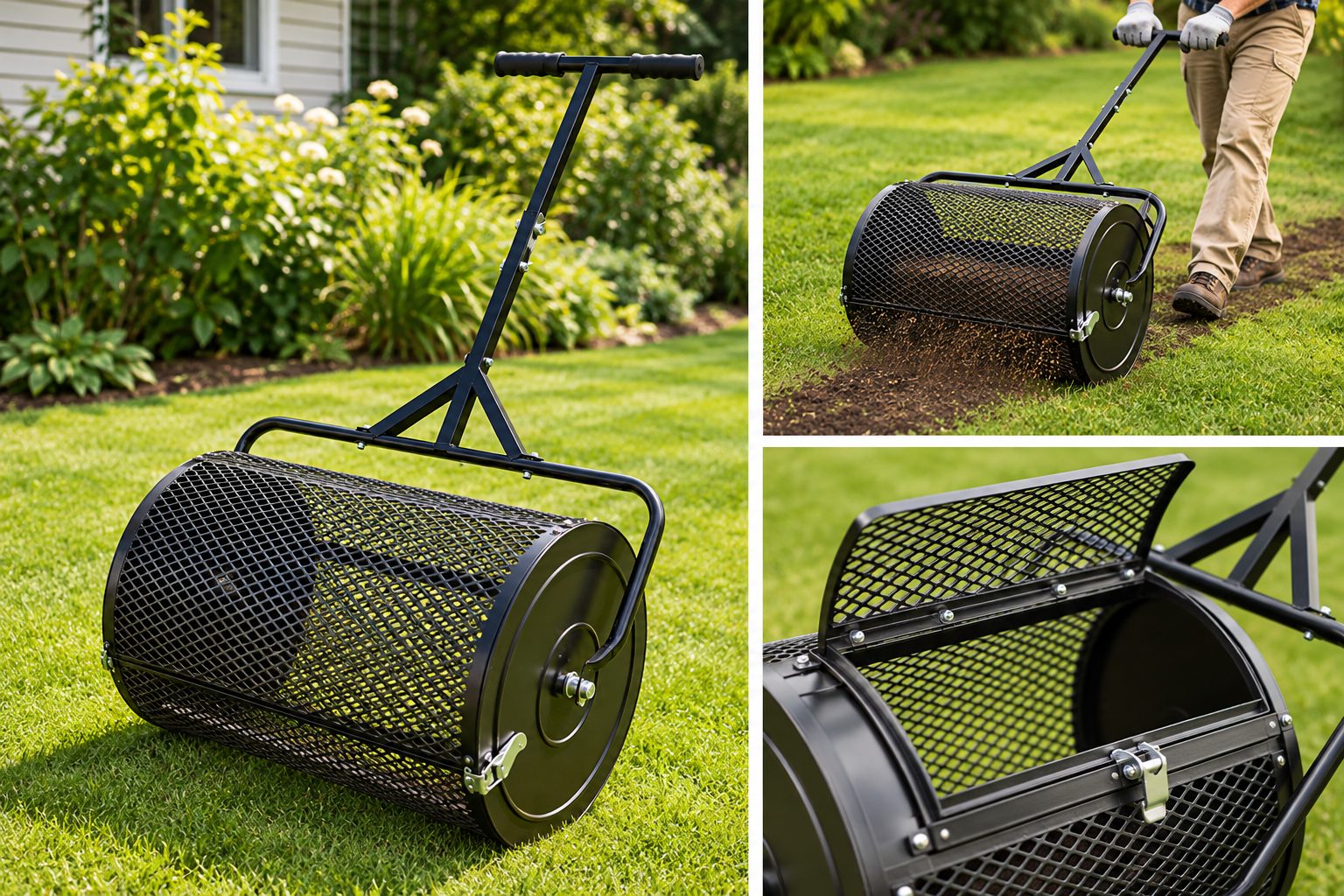
A Compost and Peat Moss Spreader offers a practical solution by combining a rotating mesh drum with a convenient push-handle design.
Discover how this simple lawn care tool can make soil preparation and surface applications more manageable.
01 | Why Is Lawn Top Dressing Important?
Healthy Grass Starts With Better Soil Management
Over time, lawns may develop compacted soil, uneven surfaces, or areas that need additional organic matter.
Top dressing involves applying a suitable layer of material over an existing lawn to support soil management and maintenance.
Depending on the lawn's condition, compost can be used to introduce organic matter, while peat moss may be selected for particular horticultural applications.
Key Advantages of Appropriate Top Dressing
Supports soil improvement practices
Helps distribute selected growing materials
Provides opportunities for seasonal lawn maintenance
Supports more consistent surface coverage
Complements other lawn care activities
The material type, application depth, and timing should always match local soil conditions and lawn requirements.
02 | The Problem With Manual Compost Spreading
Uneven Application Creates Unnecessary Work
Using a shovel to spread compost across a lawn often creates piles that must be distributed manually.
Large clumps and irregular particle sizes can make even coverage more challenging.
On larger lawns, repeated lifting, spreading, and raking can become labor-intensive.
A Better Approach: Rolling Mesh Drum Spreading
A rolling compost spreader helps distribute suitably screened material through mesh openings as the drum rotates.
The drum retains pieces that are too large to pass through its openings, which may help reduce the amount of coarse material left on the grass.
The result is a more controlled approach to lawn top dressing when the material is compatible with the drum mesh.
03 | How to Use a Compost and Peat Moss Spreader
Step 1 – Prepare Your Lawn
Before spreading, remove large debris, stones, and objects that could interfere with the rolling drum.
Assess whether top dressing is appropriate for the grass type, soil conditions, and season.
Step 2 – Prepare the Material
Use suitable, screened compost or other compatible material.
Break up large clumps and avoid excessively wet, sticky mixtures that could block the mesh.
Step 3 – Fill the Mesh Drum
Open the loading door and add the prepared material.
Avoid overfilling the drum so the contents can move as it rotates.
Close and secure the loading mechanism before operation.
Step 4 – Roll Across the Lawn
Push the spreader steadily across the intended area.
Maintain a consistent walking speed and use planned passes to improve coverage.
Observe the application depth and adjust your route as needed.
Step 5 – Inspect the Finished Area
Check for uneven coverage, excessive buildup, or areas requiring additional attention.
Follow suitable watering or maintenance practices for the selected top-dressing material.
The goal is not simply to spread more material. It is to apply the right amount, in the right place, with greater consistency.
04 | Key Features That Make a Difference
Mesh Drum Design
The perforated cylindrical drum allows appropriately sized materials to pass through while retaining larger pieces.
Benefit: Helps manage the distribution of suitably prepared materials.
T-Shaped Push Handle
The extended handle offers a practical way to guide the roller across lawn surfaces.
Benefit: Allows standing operation and convenient directional control.
Metal Frame Construction
A supporting metal frame connects the rotating drum to the handle structure.
Benefit: Provides the functional framework required for rolling operation.
Refillable Drum
The enclosed drum design allows material to be loaded and distributed during movement.
Benefit: Reduces the need for repeated manual scattering of small piles.
05 | Compost vs Peat Moss – Which Should You Use?
Both materials have horticultural applications, but they serve different purposes.
Compost
Mature, suitable compost supplies organic matter and may contribute nutrients, depending on its composition.
Peat Moss
Peat moss is primarily used as a growing-medium component or soil amendment valued for moisture management. It provides relatively little nutrition on its own.
Peat extraction also raises sustainability concerns, so some buyers may prefer alternatives such as suitable compost or other responsibly sourced growing materials.
Best Practice: Select materials according to the lawn's needs and verify compatibility with the spreader's mesh openings.
06 | Common Lawn Spreading Mistakes to Avoid
Even a practical tool works best when used correctly.
Avoid These Common Mistakes:
Loading excessively wet or sticky compost
Using material containing large stones or debris
Overfilling the rotating drum
Walking too quickly or inconsistently
Applying excessive top dressing in one pass
Leaving damp residue inside the spreader after use
After each application, remove leftover material, clean the drum, inspect the frame and fastening components, and store the equipment in a dry location.
07 | OEM/ODM Lawn Care Equipment – Developed for Your Market
Behind every practical garden tool is a product development opportunity.
At TWS Industries, we support international buyers seeking customized metal lawn and garden equipment.
Potential OEM/ODM options for compost spreader projects include:
Mesh drum dimensions and opening sizes
Steel material specifications
Handle configurations
Frame design and construction
Surface finishes and coating colors
Loading door and locking mechanisms
Private-label branding and packaging
Customization feasibility depends on engineering review, approved specifications, and production requirements.
For Importers and Distributors
A compost and peat moss spreader can complement garden tools, lawn maintenance products, and soil preparation equipment within a broader retail collection.
Its practical application and identifiable structure make it suitable for demonstrations, product photography, and instructional marketing.
Better Lawn Care Begins With Smarter Equipment
The right spreader will not replace proper soil management, but it can make one important task more convenient.
By combining controlled material distribution with a straightforward rolling design, a compost and peat moss spreader offers a useful tool for lawn top dressing and garden maintenance.
Better preparation. More consistent application. A smarter way to care for your lawn.
Looking for a Compost Spreader Manufacturer in Vietnam?
TWS Industries welcomes OEM/ODM inquiries from importers, wholesalers, distributors, and private-label garden equipment brands.
Share your product drawings, material requirements, target specifications, annual purchasing volume, and packaging needs.
Let's develop your next lawn care equipment collection.
TWS INDUSTRIES | OEM/ODM Metal Products Manufacturer in Vietnam
Email: vivian.dang@tws-industries.com
Phone / WhatsApp: +84 889 399 339
Request Your OEM/ODM Quotation Today.
Related / Bài viết & sản phẩm liên quan
Explore more content and products hand-picked for this article.


