
Telescopic Snow Pusher: A 40 HC Container Buyer's Guide
Explore our Telescopic Snow Pusher 40 HC Container Buyer's Guide, covering product features, bulk packaging, container loading considerations, and OEM/ODM sourcing solutions for importers, wholesalers, and distributors.

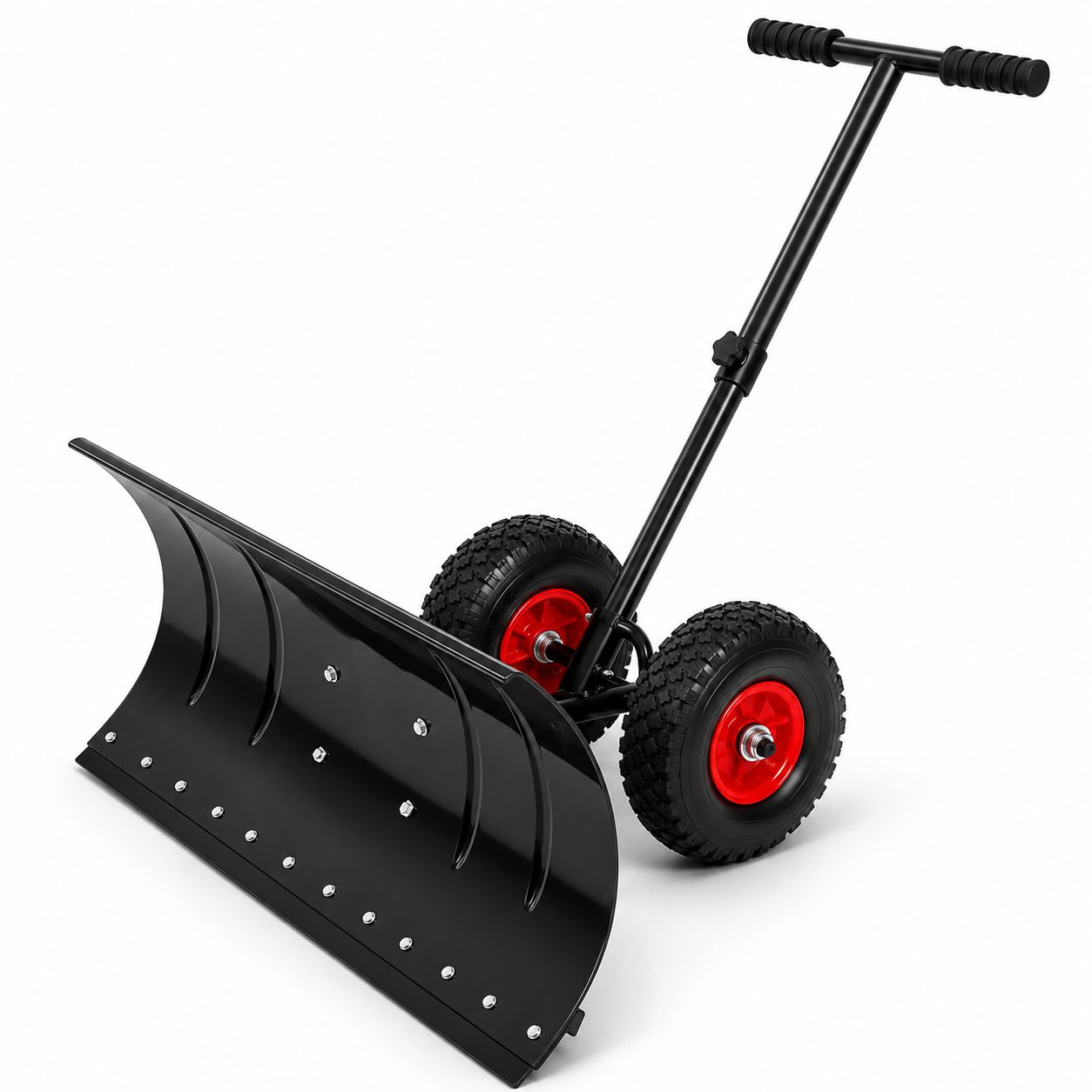
The telescopic snow pusher is a manual snow removal tool built around a wide steel blade and an adjustable D-handle, intended to push large volumes of snow in a single pass. For overseas buyers and importers, the important point is that this is a general-purpose winter tool with a fixed, documented set of dimensions: a 780 x 370 mm blade, a handle that adjusts from 1430 mm to 1600 mm, and a net weight of 5.6 kg. The product is designed for driveways, sidewalks, patios and commercial spaces, and it requires no fuel, batteries or engine maintenance. This article sets out the product overview and then walks through the shipping and specification data that matter most when you are planning an order.
What the Telescopic Snow Pusher Does
The tool is a push-style snow clearer rather than a lift-and-throw shovel. The user drives the blade forward along the ground, and the curved steel face guides snow ahead of the tool. Because the blade is 780 mm wide, each pass covers a substantial strip of ground, which reduces the number of trips across a driveway or walkway.
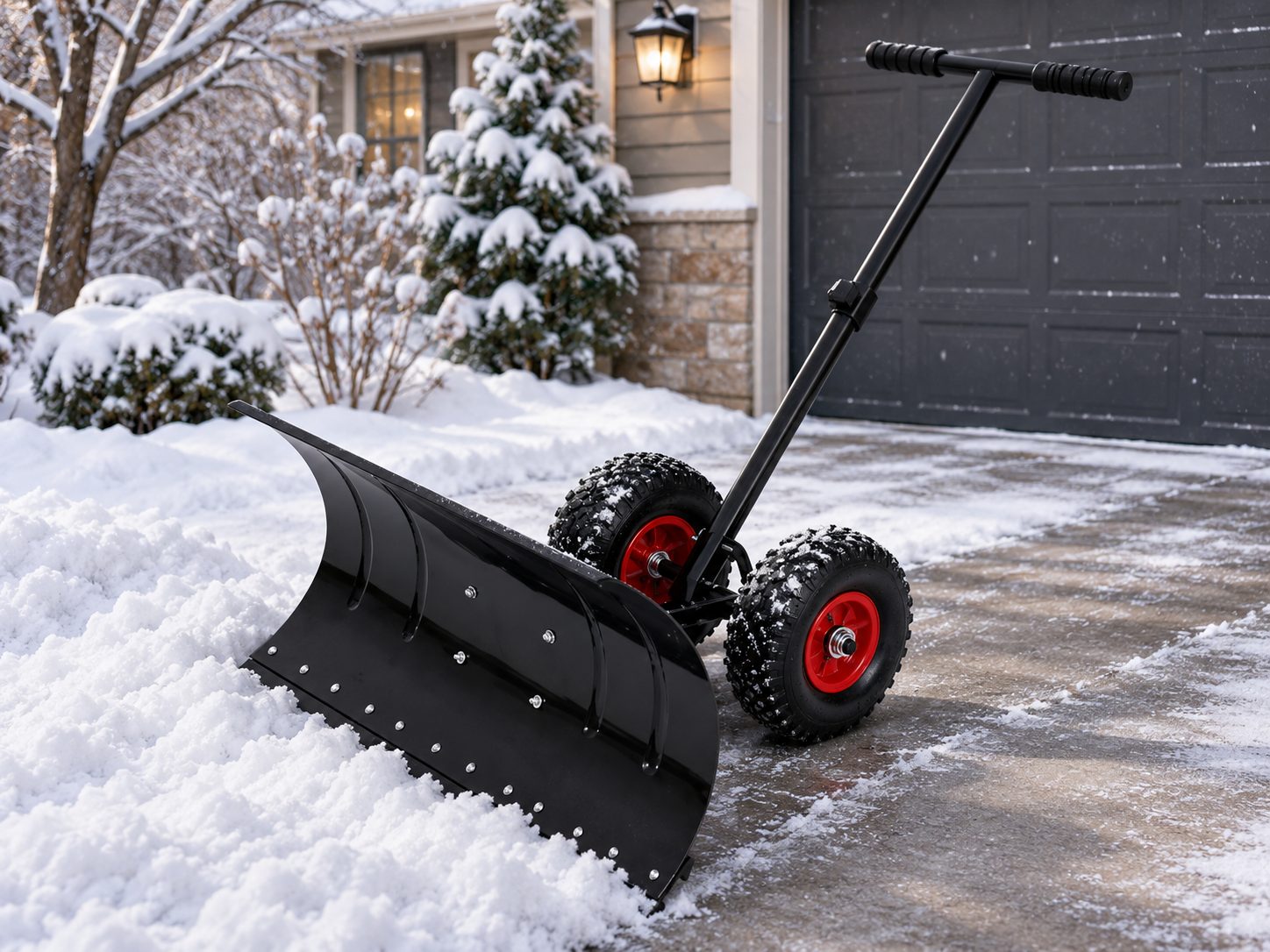
The D-grip at the top of the handle gives the operator a firm hold and better control when steering the blade, while the ergonomic layout is intended to reduce strain during longer clearing sessions. It is a manual tool throughout: no fuel, no electricity and no scheduled maintenance beyond normal care of the steel blade.
Blade Construction and Materials
The blade is made from steel with a thickness of 1.4 mm. That specification matters for buyers because it defines the gauge of the working surface and therefore the weight and stiffness of the front end of the tool. The blade is described as heavy-duty and is intended for repeated use in tough winter conditions.
The curved profile is what allows snow to roll forward rather than pile up against a flat edge. For flat outdoor surfaces such as concrete, asphalt and paved walkways, this is the normal working condition for the tool. It is not positioned as a replacement for powered equipment on very large areas, but as a practical manual option for residential and light commercial clearing.
Telescopic Snow Assembled Size
The telescopic snow assembled size is L780 x W370 mm for the blade footprint, with an overall product height that reaches 1600 mm when the handle is fully extended. The handle itself adjusts between 1430 mm and 1600 mm, so users of different heights can set a working length that suits them.
The assembled size figure of 785 x 375 x 100 mm is also recorded in the specification data, which is useful when you are checking how the unit sits relative to packaging and handling equipment. Buyers should treat the assembled and packaged figures as separate data points and confirm both with the supplier before finalising any logistics plan.
Telescopic Snow Height Cm and Handle Adjustment
The telescopic snow height cm figure of 160 cm represents the upper end of the handle's adjustment range. In practice, the operator can shorten the handle toward 1430 mm for a more compact stance or extend it toward 1600 mm for a taller working position.
This adjustment is the feature that gives the product its name. It also has a practical benefit for importers: a single model can serve a broader range of end users, which simplifies assortment planning compared with stocking several fixed-length tools. The D-grip remains at the top of the handle in either position.
Weight and Handling in Use
At 5.6 kg net weight, the tool is light enough to carry and store without difficulty, yet the steel blade gives it enough presence to move snow rather than ride over it. The weight figure appears consistently across the product data and the specification record, so it can be used confidently in catalogue copy and buyer documentation.
Because the tool is manual, the operator controls the pace and the force applied. On flat surfaces this keeps effort predictable, and the absence of an engine or battery removes the maintenance and storage concerns that come with powered alternatives.
Telescopic Snow Cbm and Packing Data
The telescopic snow cbm figure is 0.46 cubic metres, and the package dimensions are recorded as 78.5 x 37.5 x 100 cm. These figures are the basis for container planning and should be checked against the supplier's final packing list before shipment.
The specification record also lists a loading quantity of 2340 units per 40 HC container, with the carton or pack as the loading unit. Buyers should note that loading quantity depends on actual packing and stowage, so the figure is best used as a planning reference rather than a guaranteed count.
Telescopic Snow Cargo Type and Container Planning
The telescopic snow cargo type is recorded as 40 HC, meaning the product data is set up around 40-foot high-cube container loading. This is the container class the supplier uses as the reference for the loading quantity above.
For importers, the practical implication is straightforward: freight calculations, pallet or carton counts and warehouse receiving plans should be built around a 40 HC reference first, with other container sizes confirmed separately if your volume requires them. Country of origin is recorded as Vietnam, which is relevant for origin marking and documentation checks.
Comparing Manual Snow Pushers and Alternatives
Buyers typically weigh three options when sourcing winter clearing tools:
Traditional snow shovels: lower blade coverage, more lifting, but familiar to end users.
Manual snow pushers such as this model: wide blade, push-only motion, adjustable handle, no fuel or maintenance.
Powered snow removal equipment: higher clearing capacity but higher cost, weight and service requirements.
This telescopic snow pusher sits in the middle ground. It offers more coverage per pass than a conventional shovel and far simpler ownership than powered equipment, which makes it a sensible line item for retail, hardware and property maintenance channels.
Customization Options for OEM and ODM Buyers
Buyers sourcing under their own brand should raise customization early in the conversation. Typical areas to discuss include handle grip colour and material, blade finish, label and packaging artwork, and instruction manual language. Because the core structure is a steel blade plus an adjustable handle, changes are usually confined to finish, branding and packaging rather than the working geometry.
Any customization request should be matched to the documented dimensions and weight so that the specification sheet you publish stays accurate. Ask the supplier which changes affect the packed dimensions and the CBM figure, since those directly change your freight cost.
What to Include in a Quotation Request
A clear enquiry shortens the quoting cycle. Include the following:
Target quantity and preferred container type, referencing the 40 HC loading figure if relevant.
Required handle adjustment range and confirmation of the blade size you expect.
Branding requirements, including logo placement and packaging artwork.
Destination port and preferred Incoterm.
Any documentation or origin marking requirements, noting Vietnam as the recorded origin.
With those details, the supplier can respond with a quotation that matches your logistics plan rather than a generic price sheet.
Next Step: Contact the Supplier
If this telescopic snow pusher fits your winter range, contact the supplier with your quantity, container preference and branding requirements to request a formal quotation and the current specification sheet.
#TelescopicSnowPusher #SnowRemovalTools #WinterEquipment #SteelSnowBlade #B2BSourcing