
Is a 2-Foot-High Raised Garden Bed Worth It?
A taller raised garden bed offers deeper growing space and easier access, but it also requires more soil and stronger structural support.

Is a 2-Foot-High Raised Garden Bed Worth It?
A taller garden bed often looks like the better choice.
It provides more vertical space, creates a strong visual boundary and may reduce how far users need to bend while gardening.
But height alone does not determine whether a galvanized metal raised garden bed is suitable.
A 2-foot-high bed also holds more soil, creates greater outward pressure on the side panels and requires careful consideration of reinforcement, installation and filling cost.
The right question is not:
“Is a taller garden bed better?”
The better question is:
“Does its height, structure and soil requirement match the intended garden?”
Myth: A Taller Bed Is Always Better
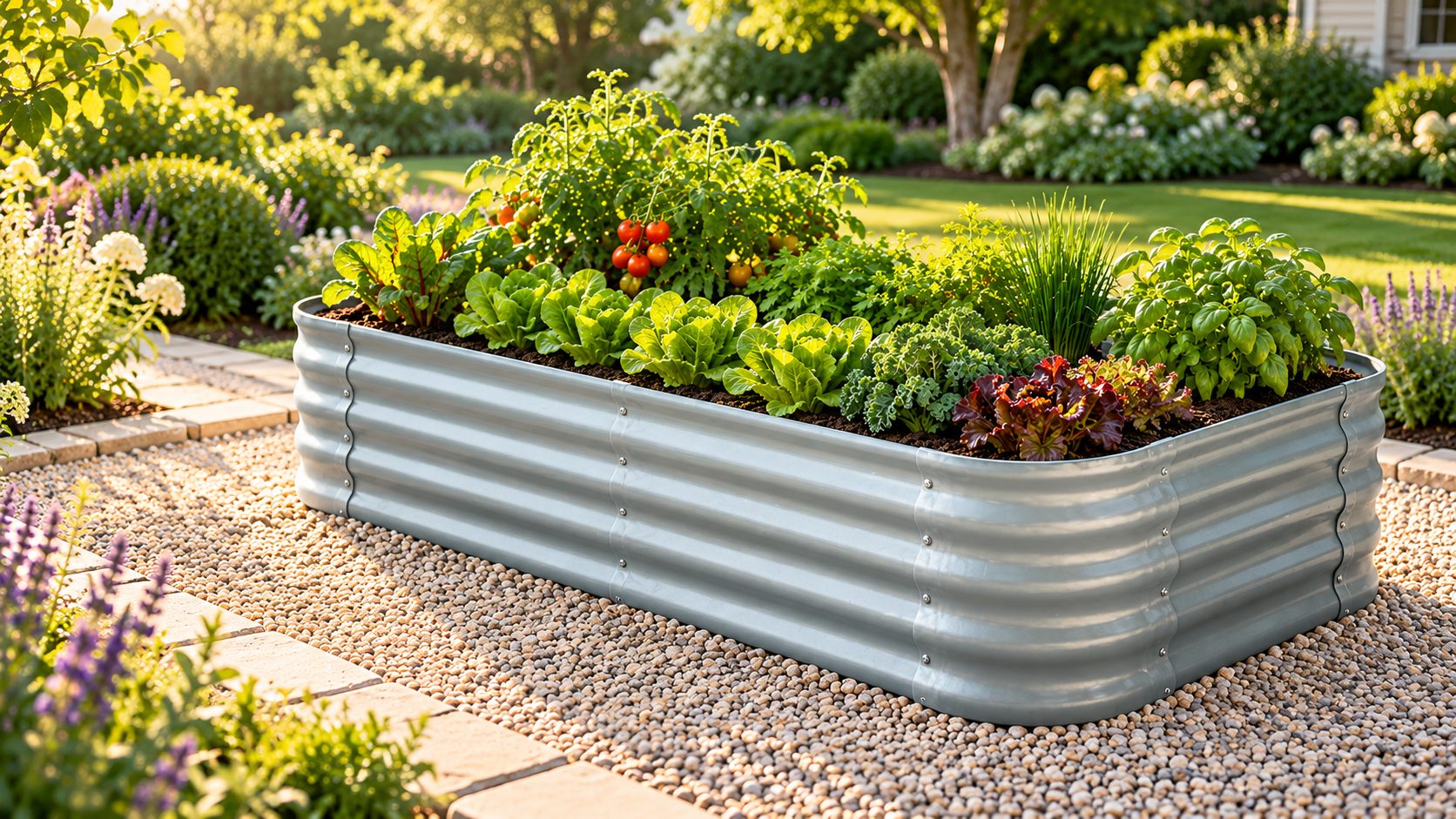
A high raised bed may appear more substantial than a shallow model, but every additional inch changes how the product performs.
Greater height can affect:
Required soil volume
Total filled weight
Pressure against the side panels
Installation effort
Packaging dimensions
Product cost
Access to the center of the bed
Planting and irrigation strategy
A taller bed can be useful, but only when the complete design supports the additional soil depth.
Reality: Height Should Match the Application
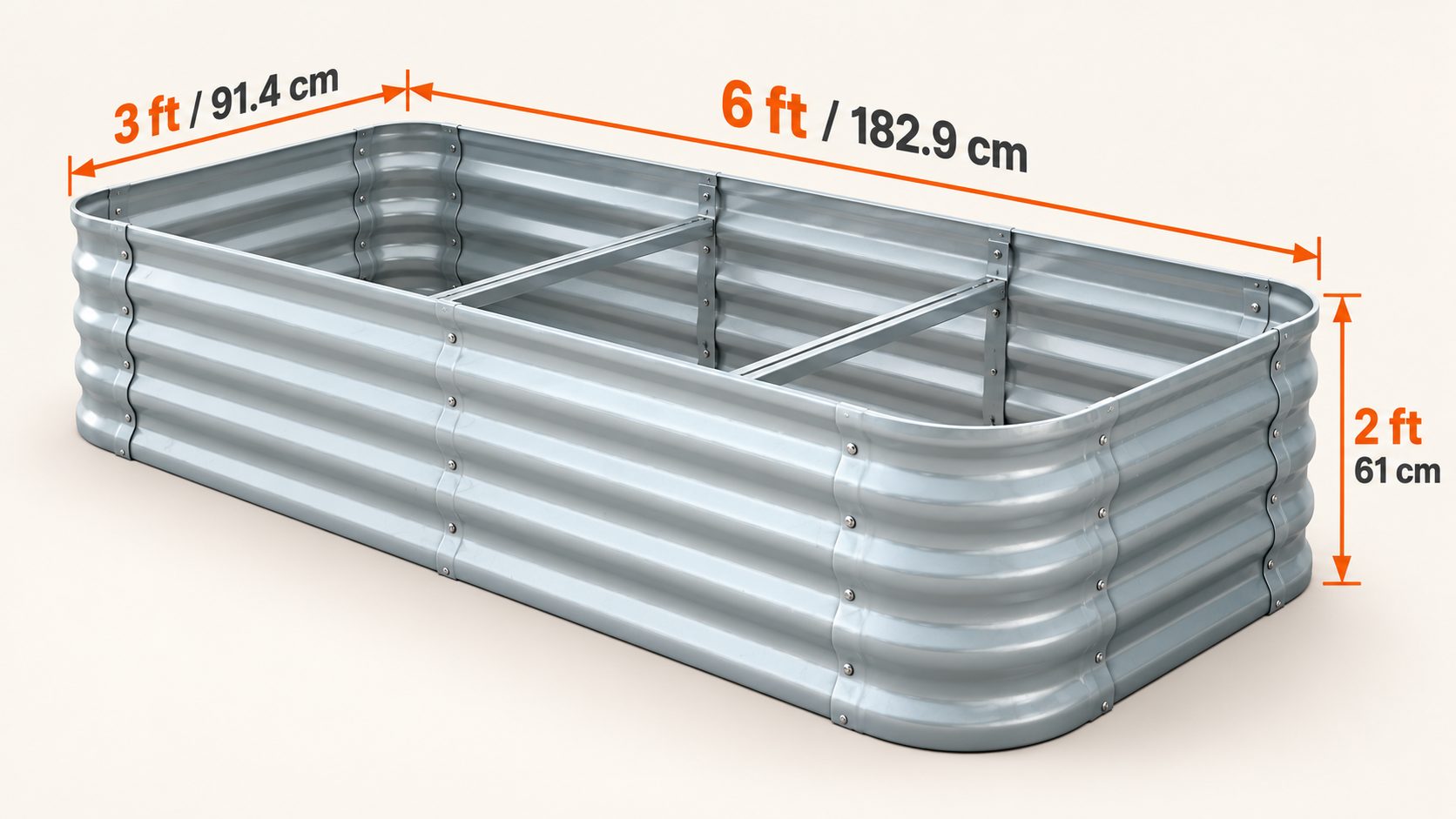
The illustrated garden bed measures approximately:
6 ft / 182.9 cm long
3 ft / 91.44 cm wide
2 ft / approximately 61 cm high
This rectangular footprint creates a long planting area while maintaining access from both sides.
The 2-foot height may be appropriate for:
Gardens with poor native soil
Areas containing stones or construction debris
Deep growing-soil preparation
Organized vegetable gardens
Backyards requiring clear planting boundaries
Gardeners who prefer a higher working surface
Decorative planting zones
Plant suitability still depends on the actual soil depth, soil mixture, drainage and local growing conditions.
Why the 6 × 3 ft Footprint Matters
A 6-foot length provides space for arranging several plants or crop groups in one bed.
The 3-foot width is equally important. A bed that becomes too wide may make the center difficult to reach without stepping into the growing soil.
Users should evaluate whether they can comfortably reach the center from both long sides.
Avoiding unnecessary foot traffic helps reduce soil compaction within the bed.
A 2-Foot Bed Requires More Filling Material
One of the most important buying considerations is often overlooked: a taller bed requires significantly more material to fill than a shallow bed with the same length and width.
The required quantity depends on:
Internal dimensions
Existing ground level
Settlement after watering
Selected filling method
Organic-material decomposition
Desired finished soil height
Not every plant requires the complete bed depth to be filled with premium growing soil.
Depending on local horticultural guidance, users may develop a layered filling plan using suitable bulk material, compost and planting soil. Materials that may introduce contamination, pests or harmful chemicals should not be used.
Soil Pressure Changes the Structural Requirement
Dry soil may appear light during installation, but its total weight increases considerably when the bed is filled and watered.
The long side panels must resist outward pressure created by the growing medium.
The illustrated product includes internal cross-bracing. This structural element may help connect the opposing long sides and reduce visible outward spreading.
Buyers should confirm:
Number and position of cross braces
Brace material and thickness
Connection method
Fastener specifications
Panel thickness
Corrugation profile
Corner-post construction
Filled-load testing
A large bed should not be evaluated by panel appearance alone.
Why Corrugated Panels Are Used
The horizontal corrugations provide more geometric rigidity than a completely flat sheet of similar material.
Corrugated panels can also create a recognizable garden-product appearance.
However, structural performance still depends on the complete combination of:
Metal grade
Sheet thickness
Corrugation depth
Panel length
Corner connections
Internal bracing
Fastener placement
Manufacturing tolerances
The corrugation itself does not confirm a load rating.
Corner Posts and Panel Connections
The product uses vertical corner sections to connect the corrugated side panels.
A suitable corner system should:
Maintain the rectangular shape
Align adjacent panels
Support the upper and lower edges
Provide secure fastening points
Avoid large assembly gaps
Maintain a consistent finished appearance
Buyers should inspect corner fit, hole alignment and fastener engagement during sample evaluation.
Open-Bottom Design: Benefit and Limitation
The illustrated raised bed appears to use an open-bottom configuration.
This design allows the filling material to remain in contact with the prepared ground beneath the bed. It may also support natural drainage when the installation surface is suitable.
However, an open bottom does not automatically solve every drainage or weed problem.
Before installation, users should evaluate:
Ground slope
Existing weeds
Soil drainage
Tree roots
Burrowing animals
Underground utilities
Nearby structures
Irrigation access
The base should be prepared according to the intended plants and local garden conditions.
Does the Higher Wall Reduce Bending?
A 2-foot wall raises the planting surface above the surrounding ground.
This may reduce how far some users need to bend compared with planting directly at ground level. However, the actual working height depends on the final soil level, the gardener’s height and the task being performed.
The product should not be described as fully accessible or ergonomic without appropriate user evaluation.
For buyers targeting senior gardening or accessibility markets, sample testing should include:
Reach to the center
Comfortable working height
Edge shape
Stability during use
Pathway width
Wheelchair or mobility-aid clearance
1-Foot vs 2-Foot Raised Garden Bed
Buying Factor | 1-Foot-High Bed | 2-Foot-High Bed |
|---|---|---|
Soil requirement | Lower | Higher |
Filled weight | Lower | Higher |
Side-panel pressure | Lower | Greater |
Working height | Closer to ground | Higher planting surface |
Structural reinforcement | Simpler in many designs | More important |
Packaging weight | Depends on construction | Usually higher |
Best consideration | Standard garden layouts | Deeper or elevated planting applications |
Neither height is universally better.
The correct choice depends on soil conditions, plant requirements, budget, garden access and structural specifications.
Planning the Garden Layout
Before assembly, users should decide:
Where sunlight reaches the garden
How water will reach the bed
Whether both long sides remain accessible
How filling material will be transported
Whether the ground is level
Where excess water will drain
How nearby pathways will be maintained
Whether future crop rotation is required
Planning these details before filling the bed can prevent expensive repositioning later.
Installation Checklist
Before adding soil:
Confirm all panels are correctly oriented
Align the corner posts
Install every specified fastener
Attach the internal cross braces
Check diagonal measurements
Confirm the bed sits level
Inspect exposed edges
Tighten connections evenly
Check for visible panel distortion
The final assembly instructions should match the supplied product configuration.
What B2B Buyers Should Evaluate
Importers and retailers should request more than overall dimensions.
A technical sourcing review should include:
External and internal dimensions
Usable soil depth
Metal grade
Sheet thickness
Coating specification
Corrugation profile
Corner-post design
Cross-brace quantity
Fastener material
Edge treatment
Assembly time
Carton dimensions
Container-loading quantity
Required corrosion and structural tests
These details influence product cost, customer experience and return risk.
Shipping Efficiency Matters
Raised garden beds are often shipped in knock-down form to reduce packaging volume.
A buyer should evaluate:
Number of panels per carton
Hardware organization
Protective separation between metal parts
Carton strength
Assembly-instruction clarity
Package weight
Pallet configuration
Container utilization
Drop-test requirements
A structurally strong product can still create customer complaints if panels arrive scratched, bent or missing hardware.
OEM/ODM Raised Garden Bed Manufacturing
TWS Industries supports customized metal raised garden-bed development for importers, wholesalers, retailers and private-label garden brands.
Customization options may include:
Length, width and height
Panel thickness
Metal grade
Corrugation profile
Corner-post configuration
Internal cross-bracing
Surface color and finish
Edge-protection design
Fastener sets
Custom logo and labels
Assembly instructions
Retail and export packaging
Barcode and shipping marks
Final structural, corrosion-resistance and safety claims should be confirmed through drawings, approved samples and appropriate testing.
Information Required for a Quotation
Buyers should provide:
Required external dimensions
Target usable soil depth
Metal grade and thickness
Surface-finish requirements
Corner and edge specifications
Cross-brace requirements
Estimated annual quantity
Destination market
Testing requirements
Packaging and container-loading requirements
The Final Decision
A 2-foot-high garden bed can provide deeper growing space, a more defined layout and a higher working surface.
But those benefits must be balanced against greater soil demand, filled weight and structural pressure.
The illustrated 6 × 3 × 2 ft galvanized metal raised garden bed becomes a stronger product proposition when its corrugated panels, corner posts, cross braces and packaging are engineered as one complete system.
Contact TWS Industries for OEM/ODM development, sample preparation and customized bulk-order quotations.
Related / Bài viết & sản phẩm liên quan
Explore more content and products hand-picked for this article.
 Blog
Best Plants for Small Gardens: 15 Space-Saving Choices
Read more → Blog
Black Metal Indoor Plant Stand for Modern Minimalist Home Styling
Read more → Product
Galvanized Steel Raised Garden Bed Oval Metal Planter Box _ L72" x W36" x H11.8"
View product → Product
Galvanized Steel Raised Garden Bed Rectangle Metal Planter Box _ L72" x W36" x H11.8"
View product → Product
Galvanized Steel Raised Garden Bed Rectangle Metal Planter Box _ L96" x W48" x H11.8"
View product → Product
6x3x2ft Outdoor Metal Raised Garden Bed, Planter Box for Vegetables, Flowers, Herbs
View product → Product
Galvanized Steel Raised Garden Bed Rectangle Metal Planter Box _ L96" x W48" x H11.8"
View product →- Product
Galvanized Steel Raised Garden Bed Oval Metal Planter Box _ L48" x W36" x H11.8"
View product →  Product
Rectangular Plant Stand with Lower Shelf
View product →